Beetle Mania - Or How I Learned To Stop Worrying And Love The Bug
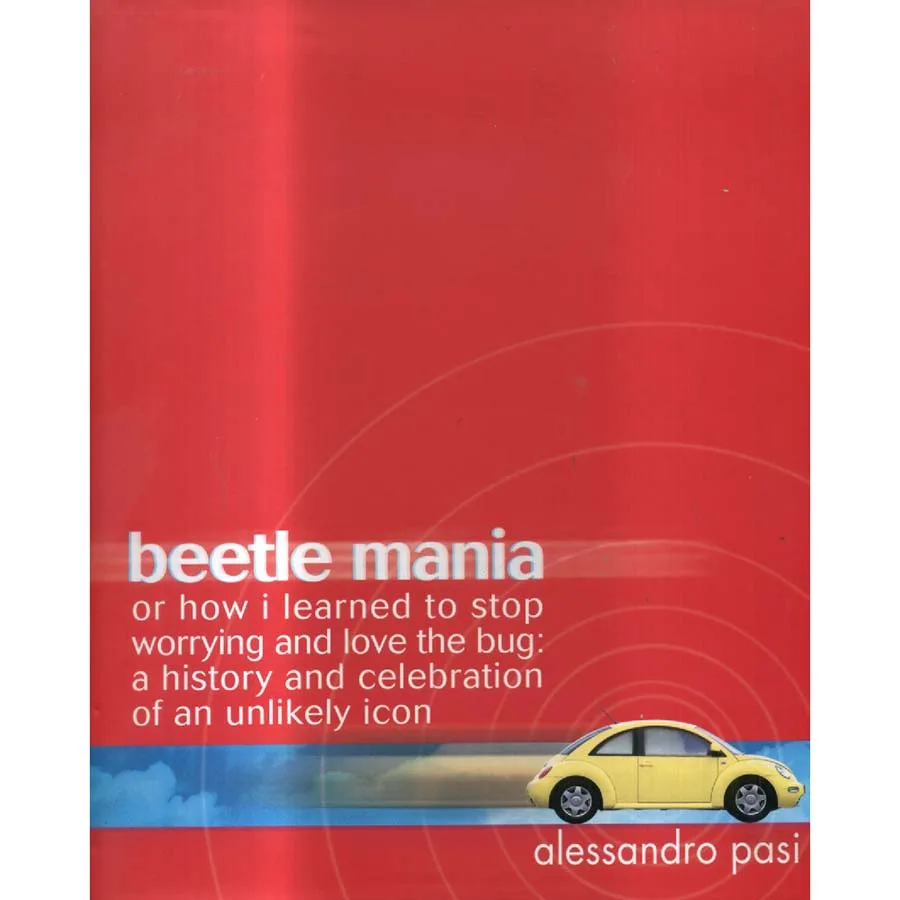
Publisher: St Martins Press
Format: Hardback
ISBN: 9780312265243
There are people who regard the Volkswagen Beetle as a modest, economical little car, designed to transport ordinary families without excessive fuss or financial extravagance. Then there are those who become so hopelessly devoted to the peculiar little creature that they begin collecting miniature replicas, attending international gatherings and discussing the subtle differences between dashboard knobs with the intensity normally reserved for matters of national security. Welcome to Beetle Mania, a condition for which there appears to be no known cure, although ownership of a second Beetle frequently makes the symptoms considerably worse.
In Beetle Mania – Or How I Learned to Stop Worrying and Love the Bug (2000), Alessandro Pasi celebrates the extraordinary affection inspired by one of the world’s most recognisable automobiles. Published by St. Martin’s Press, this entertaining exploration of Volkswagen culture examines how a humble German people’s car became an international phenomenon, inspiring devotion far beyond anything its original designers could reasonably have anticipated.
The Beetle was hardly an obvious candidate for automotive immortality. Its engine was mounted at the wrong end, its silhouette resembled an enthusiastic attempt to streamline a bread roll, and its performance rarely threatened the established order of international motorsport. Nevertheless, its simplicity, durability and unmistakable personality helped it conquer markets around the world.
Over the decades, the Beetle became a symbol of practically everything imaginable. It represented economical transport, post-war recovery, youthful independence, countercultural rebellion and, eventually, nostalgic collecting. Few vehicles have managed to appeal simultaneously to respectable suburban families, enthusiastic students and people whose principal ambition was to drive across an entire continent without making any definite arrangements.
Pasi explores the remarkable cultural life of the Beetle, a car whose appeal extends well beyond its mechanical specifications. From lovingly preserved originals to spectacularly customised creations, the Bug inspired an extraordinary variety of interpretations, proving that affection for an automobile need not be restricted by conventional notions of good taste.
Naturally, Beetle enthusiasts possess their own fascinating priorities. A perfectly functional car may be dismantled because its paintwork is the wrong shade, while an obscure piece of factory trim can inspire a search involving several countries and an alarming amount of postage. Meanwhile, a vehicle originally celebrated for being inexpensive can absorb restoration costs sufficient to purchase something considerably newer and more comfortable.
Yet that is precisely the magic of the Beetle. It was never merely a motor car, but a cheerful mechanical personality that somehow persuaded millions of people to overlook its limitations and love it anyway.
Condition: As New. This copy is exceptionally well preserved, presenting as new despite its 2000 publication date. Unlike a surviving classic Beetle, it requires no replacement heater channels, floorpan welding or prolonged investigation into mysterious electrical faults.
Published by St. Martin’s Press in 2000. ISBN: 9780312265243.
Offered by Crappy Old Books, where we appreciate automotive obsessions, particularly when indulging them involves considerably less expense than maintaining a collection of ageing Volkswagens.
A splendid addition to any collection of Volkswagen literature, automotive culture or classic motoring nostalgia. Particularly recommended for anyone who has ever looked at a small, round German car and felt an entirely irrational surge of affection, despite knowing perfectly well that its heater probably doesn’t work.
Keep browsing: See more Transport books Other books by Alessandro Pasi